Portable Fire Extinguishers
NFPA 10: Standard for Portable Fire Extinguishers
Gielle offers one of the largest selections of quality fire extinguishers. Our products are of the highest quality and offer a wide range of approvals including CE Mark and many more.
Gielle provide a comprehensive range of high quality, cost-effective fire extinguishers, hose reels, stands and cabinets that are designed and produced to the latest Fire Authority standards.
Our staff have many years experience within the fire and health and safety industries and we aim to supply the highest quality products at the best prices on the world.
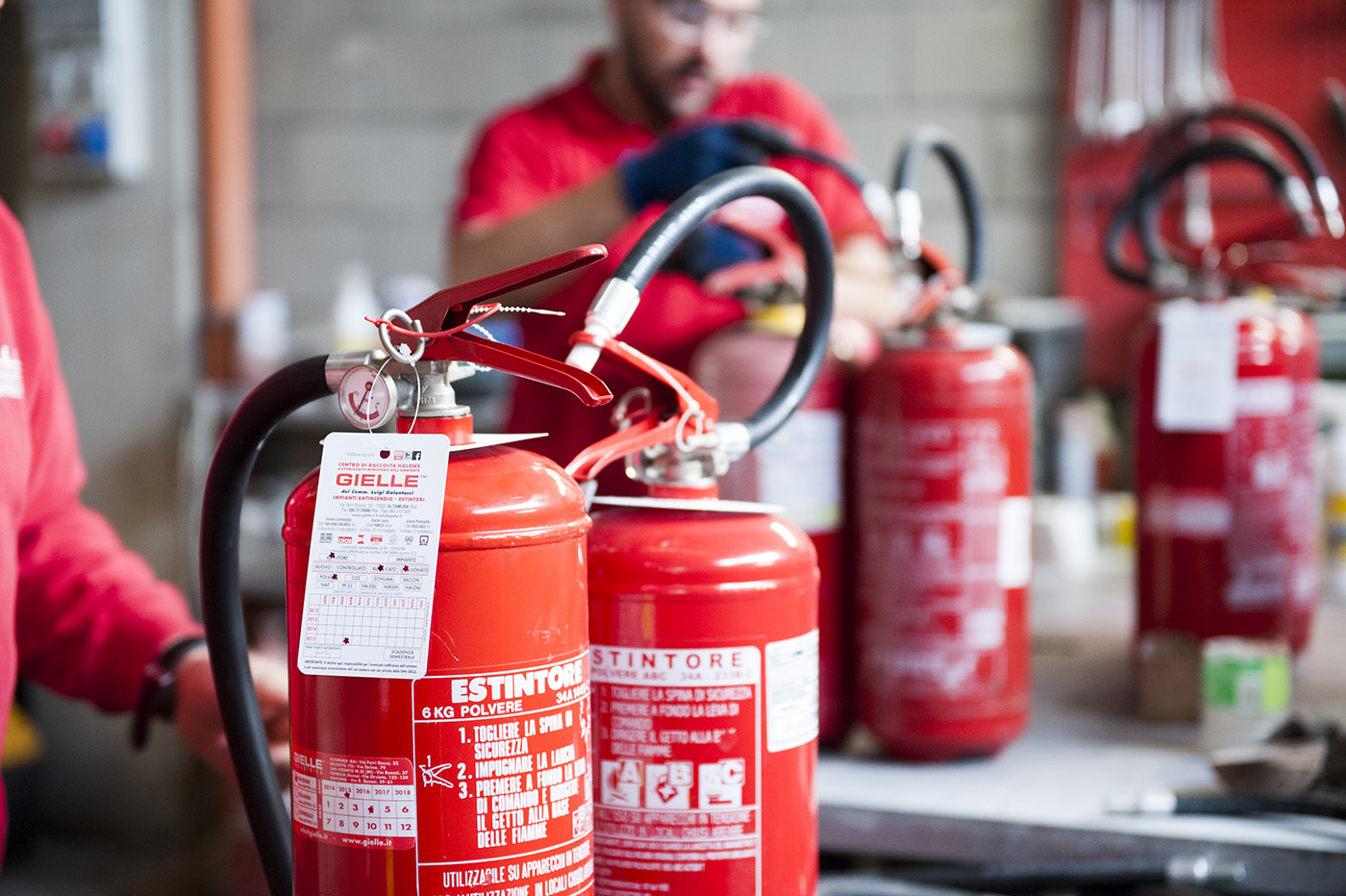
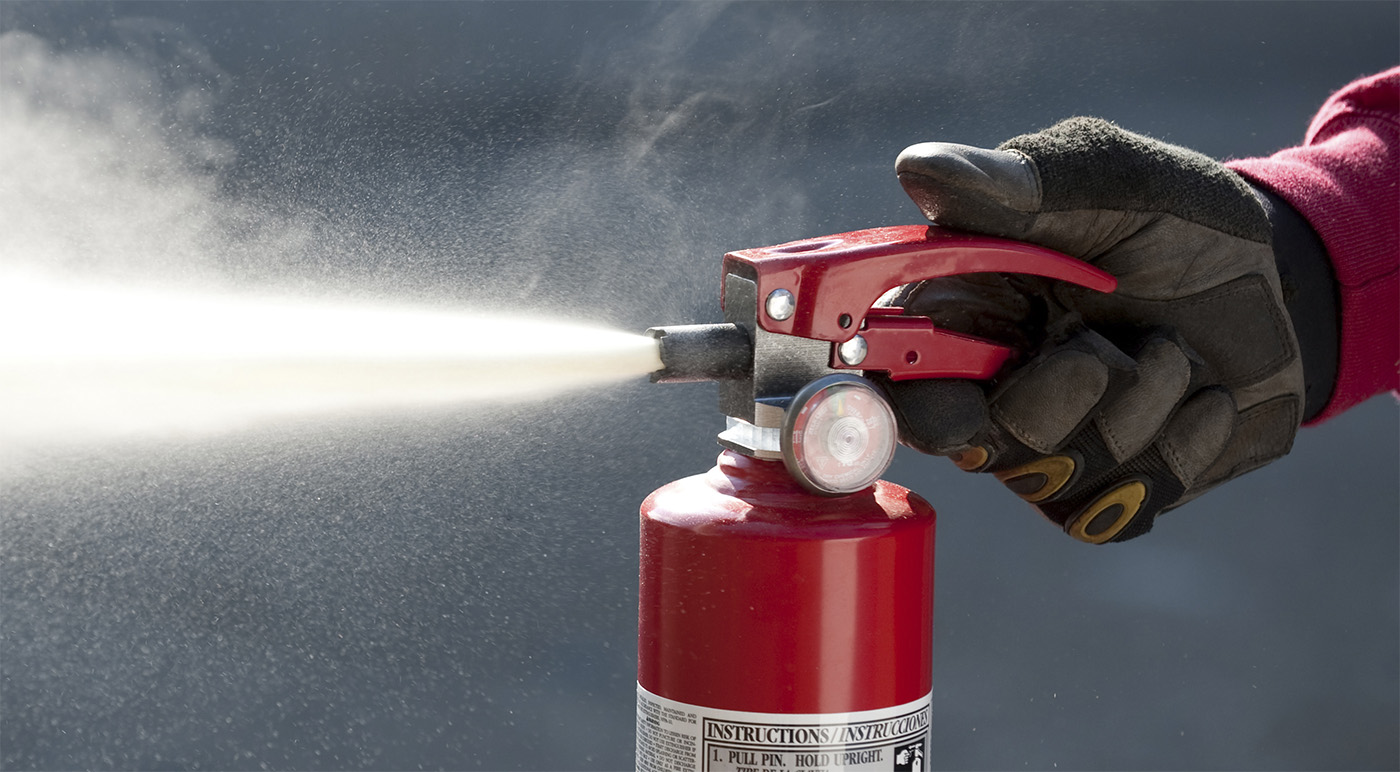
We supply fire extinguishers for all applications
Class A Ordinary Combustibles
Class B Flammable and combustible liquids
Class C Flammable gases
Class D Combustible metals
Class E Electrically energised equipment
Class F Cooking oils and fats
Make sure you’re prepared for those critical first two minutes of a fire.
Choose from a complete line of Gielle portable fire extinguishers to protect your people and property.
Portable fire extinguishers come in a range of sizes and ratings, and the higher the rating, the larger the fire it can be used on.
However, larger and heavier extinguishers (which generally have the higher ratings) can be more difficult to handle, especially for persons of a lighter build.
It is recommended that the extinguisher you buy is approved by standards.
Fire Extinguishers – Types & Uses
Portable Fire Extinguishers can save lives and property by putting out or containing fires within the capability of the extinguisher.
However, they must be of the correct type for the particular fire, and they must be used correctly.
Powder Fire Extinguishers offer protection against Class A, B and C Fires and are a general multi-purpose extinguisher. Powder Fire Extinguishers are safe to use on live electrical equipment but the powder residue may also cause harm to some equipment. Dry Powder Extinguishers work as the Powder reacts with the fire and the powder spreads therefore extinguishing the fire.
These extinguishers are rated as either ABE or BE. ABE rated extinguishers are considered suitable for Class A, Class B, Class C and Class E fires. They are not considered effective for Class F fires. BE rated extinguishers are considered suitable for Class B, Class C and Class E fires, and may be used with limited effectiveness on Class F fires. They are considered effective for Class A fires.
Suitable on Class F fires and may be used on Class A fires. Not considered effective for Class B or Class C fires and dangerous if used on Class E fires. Wet Chemical (F-Class) Fire Extinguishers offer protection against fires that involve cooking oil or fats.
Wet Chemical Fire Extinguishers also offer a small ‘A’ Fire Rating. No other type of fire extinguisher will be effective against fires involving cooking oil or deep fats.
Suitable for Class A fires. Not considered effective for Class B and Class C fires, and dangerous if used for electrically energised equipment or cooking oils or fats.
Water Fire Extinguishers offer protection against Class A fires that typically involve common combustible materials such as wood, paper, straw, textiles, soft furnishing and materials.
Suitable for Class A and Class B fires, with limited effectiveness for Class F fires. Not considered effective for Class C fires, and dangerous if used for electrically energised equipment.
Foam Fire Extinguishers offer protection against Class A and B Fires that typically involve liquids or materials that liquefy such as petrol, oils, paints and fats. Foam extinguishers form a layer over the top of the burning substance and remove oxygen from the fire. Foam Fire Extinguishers may also be referred to as AFFF (aqueous film-forming foam)
Suitable for Class E fires. Has limited effectiveness on Class A, Class B and Class F fires. Has limited effectiveness on Class B fires. Not considered effective for Class F fires.
Carbon Dioxide Fire Extinguishers offer protection against Class B fires that involve liquids or materials that liquefy such as petrol, oils, paints and fats. Carbon Dioxide Extinguishers discharge the extinguisher content under pressure which replaces the air surrounding the fire with the inert CO2 gas which does not support combustion therefore extinguishing the fire. Carbon Dioxide Fire Extinguishers are safe for use on live electrical equipment. Carbon Dioxide Extinguishers do not leave a residue.
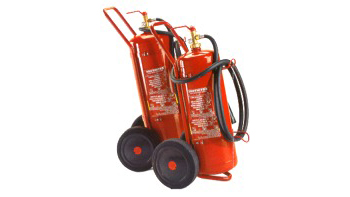
Gielle is leader in fire extinguisher maintenance
Fire extinguishers maintenance is necessary to verify that all the devices are correctly stored and maintained in efficiency, in order to guarantee perfect functioning in the event of an emergency. The legislation establishes that all fire-fighting devices, equipment and systems must undergo periodic maintenance by certified and specialized third-party companies.
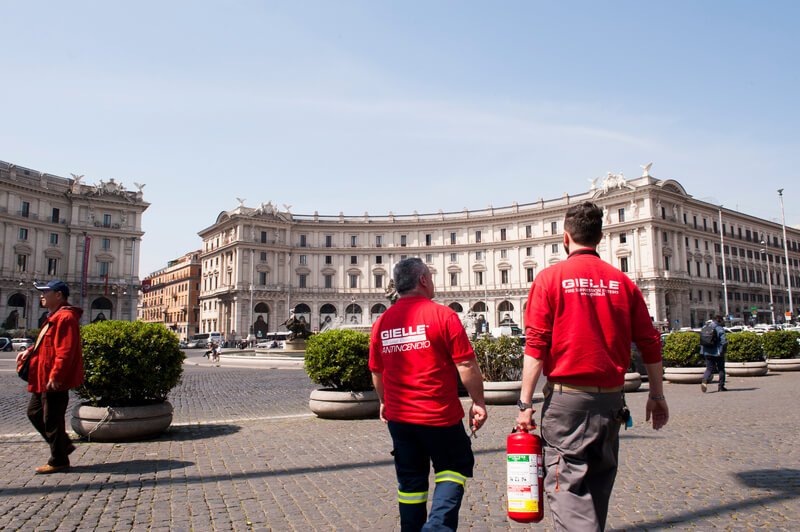
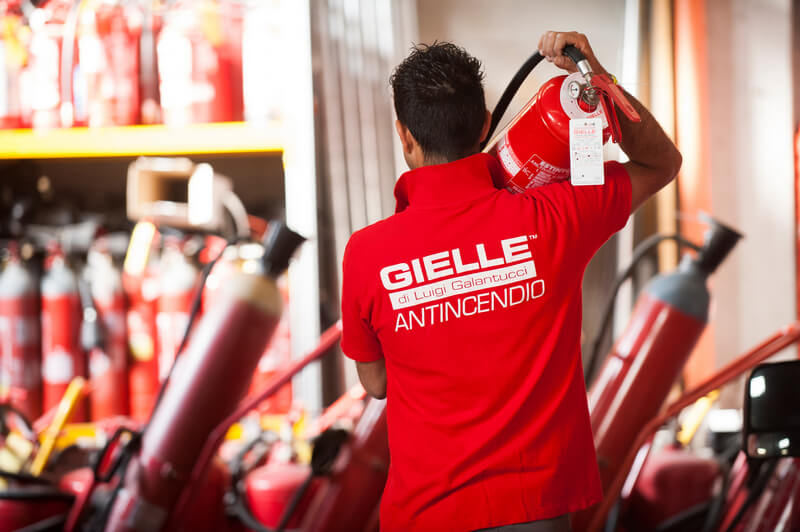
Gielle, leader in the fire-fighting sector for more than 55 years, offers the complete fire extinguisher maintenance service, in all its phases: visual inspection, monthly inspections, hydrostatic testing and annual maintenance checks.
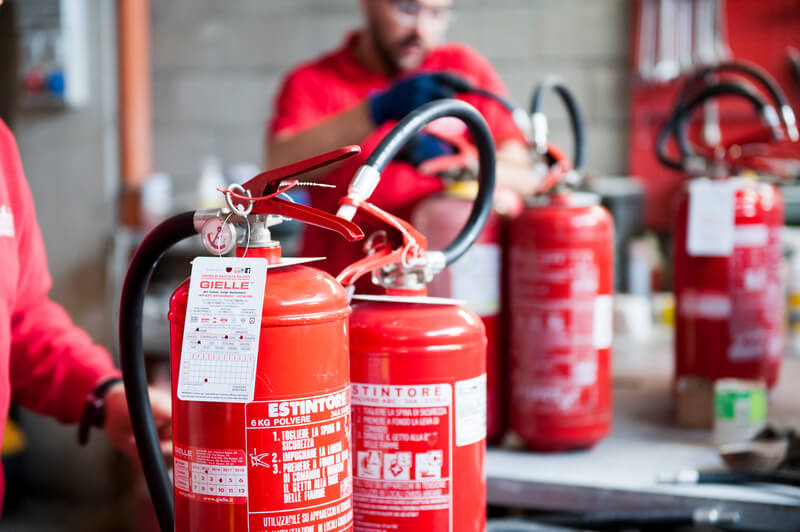
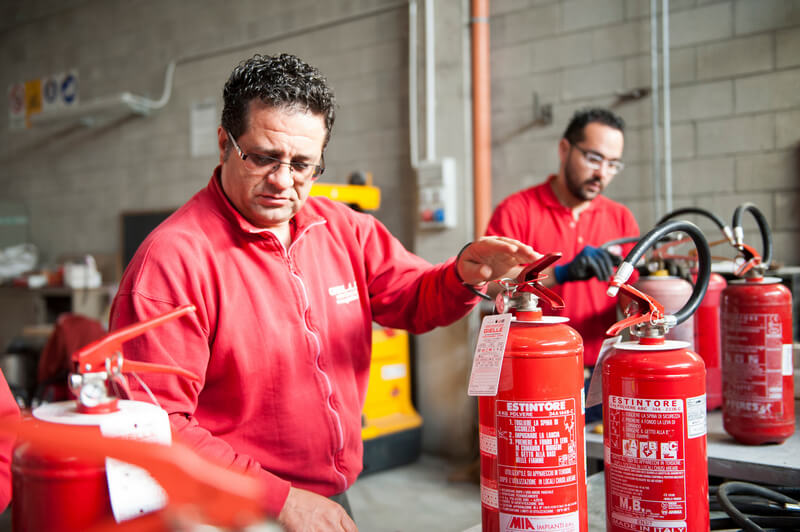
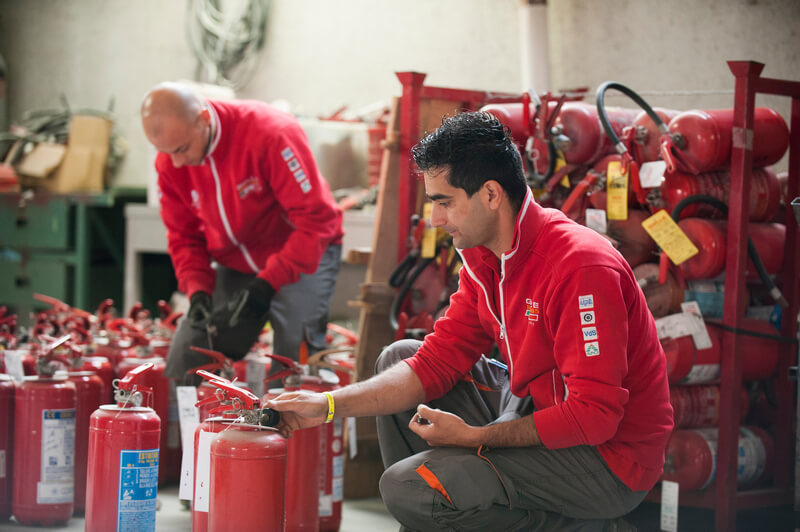
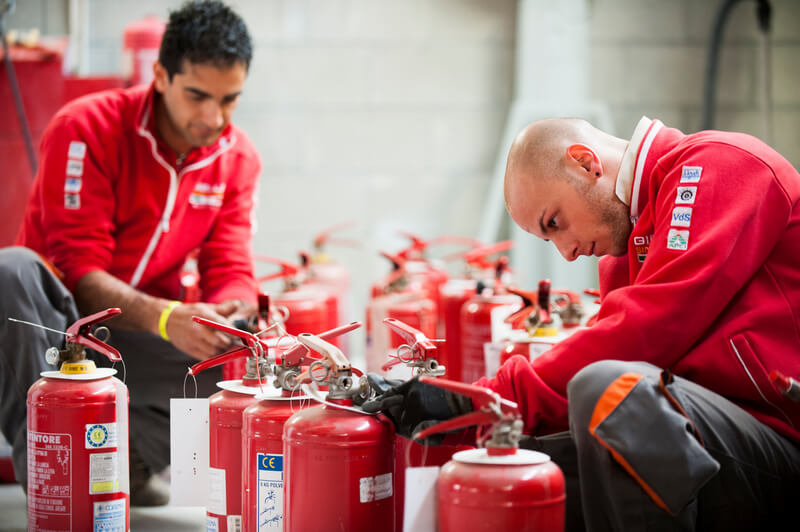
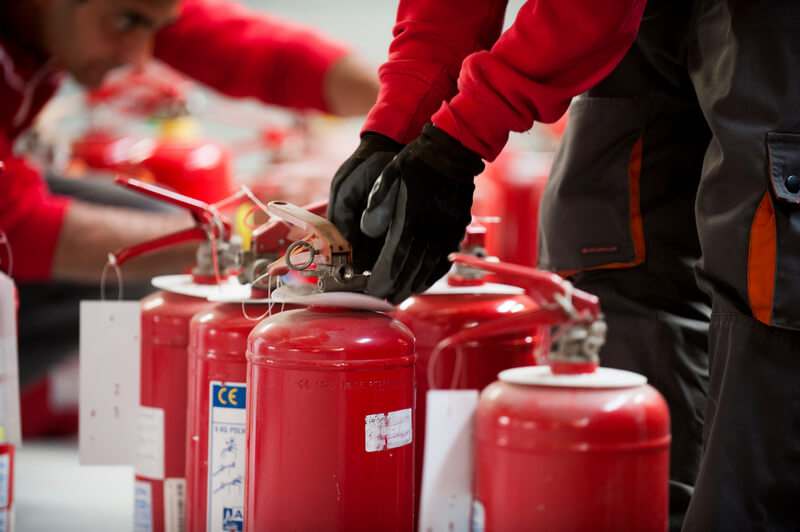
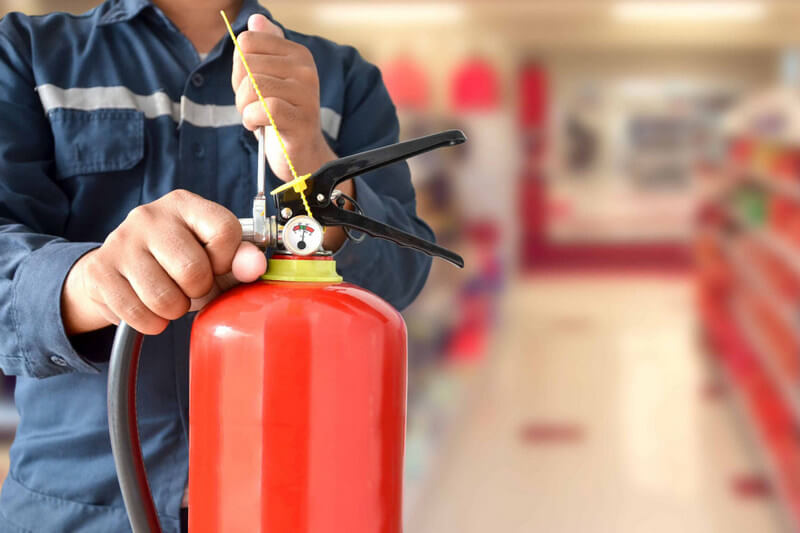
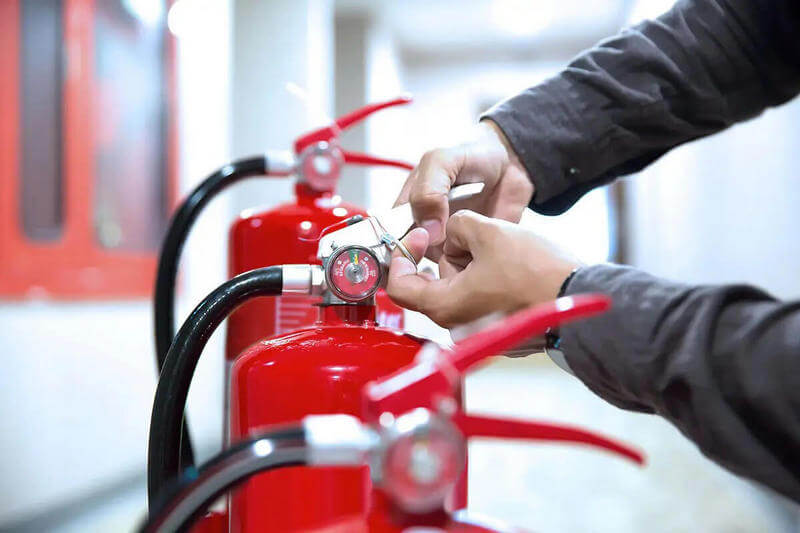
Hire a professional for your on-site servicing and maintenance of fire extinguishers
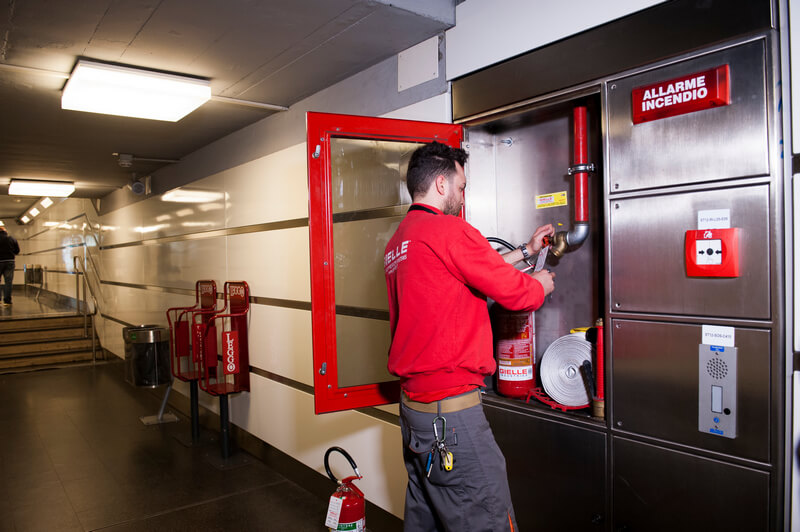
A monthly visual check of your fire extinguishers can help prevent major issues, but you also need a yearly inspection by a qualified professional who can examine your fire extinguishers more closely.
The professional will make sure that all the mechanical parts of your fire extinguishers are working properly and record the inspection on the tags of the fire extinguishers when done. This inspection should also assess the need for hydrostatic testing.
REQUEST INFORMATION AND FREE QUOTES
CALL US AT
+39 080 311 89 98
FIRE EXTINGUISHER MAINTENANCE SERVICE
Trust Gielle for a 360° maintenance service
01
Visual inspection
According to NFPA 10, fire extinguishers inspection must be carried out once every month, recording the month and year of the inspection and the person conducting it. Extinguishers in locations that expose them to rust, impact or tampering should be inspected more often to ensure that it can be used reliably and effectively in case of emergency.
02
Maintenance
Fire extinguisher maintenance needs to be performed every year by a certified person and consists in the examination of fire extinguishers mechanical parts, extinguishing agent, expelling means and physical condition. Each fire extinguisher will have then a tag or label securely attached, indicating that maintenance was performed.
03
Hydrostatic Testing
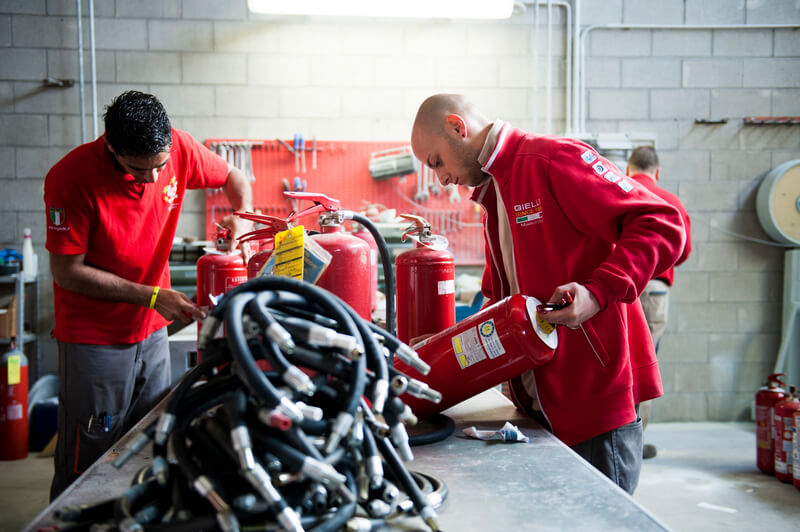
Depending on the type of extinguisher, these are done either every 5 or 12 years by trained and certified technicians. During a hydrostatic test, the extinguisher undergoes an internal and external inspection: it’s stripped of most of its components except the shell and hose and filled with pressurized water for a specific duration. If the cylinder fails the hydrostatic test (leakage, distortion, etc) it must be discarded.